Lawyers have set out the legal problems with the decision and asked the Mayor to respond. If the response isn’t adequate, the next step is to apply for a judicial review.
After reviewing the planning process, lawyers believe there are significant legal issues with the Mayor’s decision that need to be examined by the courts.
What is a judicial review?
A judicial review asks a court to check whether a decision was made lawfully. It doesn’t re-run the planning debate. If the court finds the decision wasn’t lawful, the planning permission is quashed.
Ground 1 · Facilities
Loss of leisure and community facilities
Whether the loss of the cinema, football club and bowling alley, and the lack of any replacement, was properly assessed.
Ground 2 · Equalities
Impact on different groups
Whether the decision properly considered how losing these facilities could affect some people more than others, including children, older and disabled people, and community and faith groups who use the site.
Ground 3 · Nature
Protection of wildlife and habitats
Key ecological surveys, and decisions on protecting great crested newts and other protected species, were left until after planning permission was granted instead of being assessed first.
Lawyers set out the legal concerns and ask for a response.
3
Next
Apply for judicial review
If the Mayor’s response isn’t adequate.
4
Then
The court examines it
Was the decision made lawfully?
5
If not
Permission quashed
The planning permission would be cancelled.
What’s at stake?
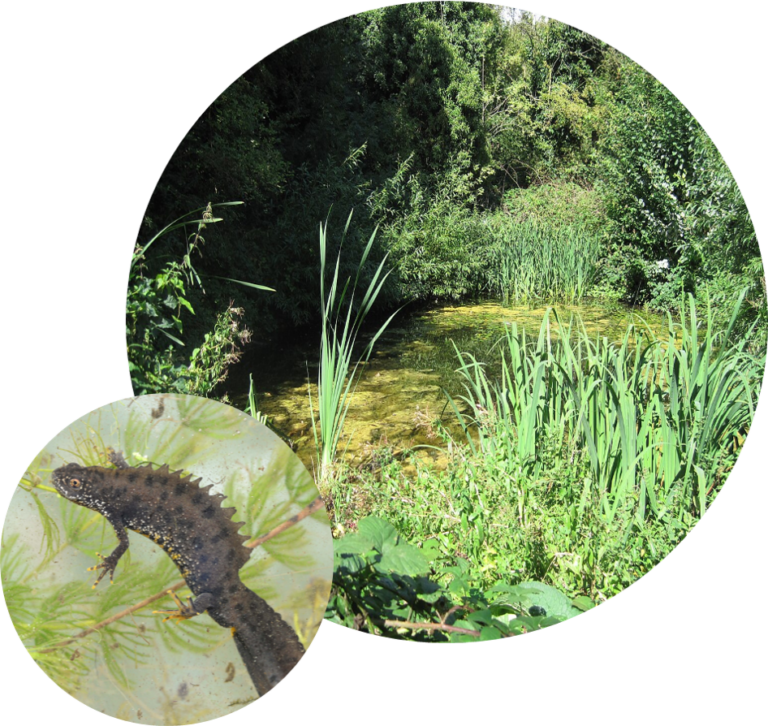
Glebelands is a wet woodland of exceptional biodiversity, designated a Local Nature Reserve in 1997.
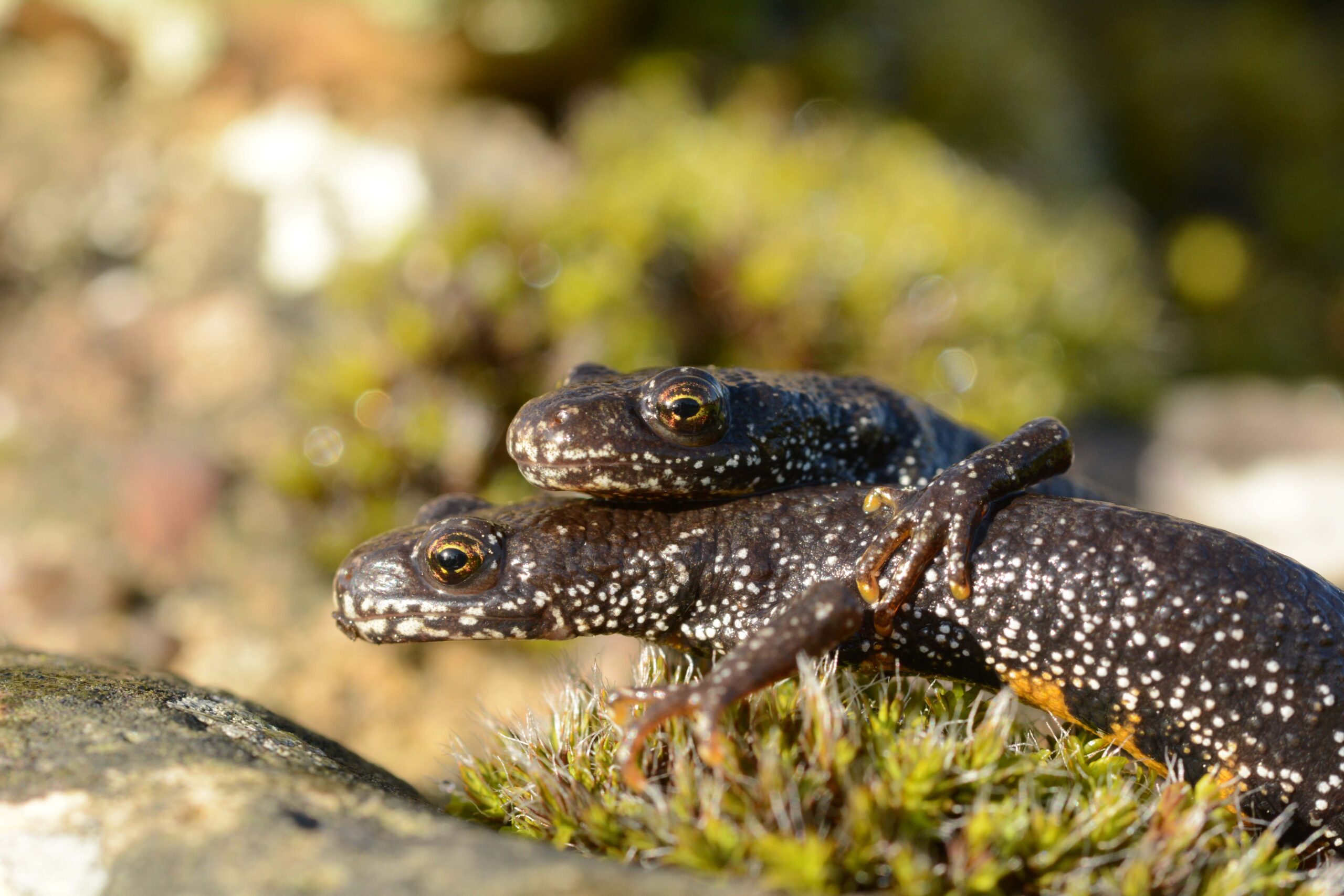
It holds London’s most significant population of great crested newts, alongside other protected species, and is the only known site in London where some rare plants have been recorded in recent years.
Arada’s plan for the Great North Leisure Park, right next to the reserve, would be one of the densest developments in the country. Here’s what it would mean.
A back garden
Protective fencing would come down and new paths would open the reserve to residents. Dressed up as “enhancing biodiversity”, it turns a nature reserve into a back garden for 1,485 flats.
Habitable footprint
About 10% of the development site is itself suitable land habitat for newts, which travel over 500 metres from their ponds. The rough grass and hedgerow would all be lost.
Poor mitigation
The developer’s own report admits a “significant adverse effect” on the reserve and its newts, but offers no meaningful solutions at a time when mitigation is rarely followed through.
Community hub lost
The cinema, football club, bowling alley and restaurants have given North London, and especially young people, a safe social space for decades. All of it would go, with no replacement.
Unaffordable homes
Only 23% of the flats would be affordable, below the Mayor’s own targets. The other 1,104 would sell at market prices, some estimated at over £1 million.
Overruled from above
Local councillors rejected the scheme in December 2025. The Mayor called it in and approved it, overriding the borough that will live with it.
Normally the newts are surveyed first, so the decision can protect them. At Glebelands it happened the other way round: permission came first, and the surveys that follow would cover only part of the site, could take place after building starts, and would not be open to public comment.
Protected under the Wildlife & Countryside Act 1981 and the Conservation of Habitats and Species Regulations 2017.
A pattern from the start
Arada refused to carry out the newt survey required by Natural England, claiming it was unnecessary. Its own consultant admitted that, without proper mitigation, the development would have a “significant adverse effect” on the reserve and its newts.
In the view of the expert organisations that formally objected, the scheme would in all probability lead to the local extinction of the newts and serious damage to the reserve.
Isn’t based on proper survey data for visitor footfall, shading or species.
Focuses on the wrong part of the woodland.
Does little to protect great crested newts.
Proposes “management” that could make things worse.
Proposes “enhancements” that are tokenistic or already in place.
Ignores pollution risks during construction.
Wrongly claims there is no newt habitat on the development site.
Offloads responsibility onto the council and volunteers.
Offers a five-year plan for a problem that will last for generations.
What the experts say
Formal objections from eight conservation organisations, local and national.
LEHART strongly objects to the planning proposal on the grounds that the scale and proximity of the development would have significant adverse effects on the high status population of internationally protected great crested newts and their habitat that cannot be adequately addressed through mitigation measures.
London Essex and Hertfordshire Amphibian and Reptile Trust
LEHART
Many of us within this society and other charities and bodies have worked hard for decades to secure this species from damage and decline, and this proposal strikes at the heart of all that we have worked towards.
London Natural History Society
www.lnhs.org.uk
We consider that the scale and proximity of the proposed development would have extremely negative consequences for the internationally protected great crested newt. We do not believe that these impacts can be adequately mitigated in this situation.
London Amphibian and Reptile Group
www.groups.arguk.org/larg
The proposed mitigation measures, in our assessment, fall substantially below the scale and nature required to ensure that the impacts of the development would be adequately addressed.
Amphibian and Reptile Conservation Trust
www.arc-trust.org
Without suitable and substantial mitigation measures there is a high likelihood that the development would have significant adverse impacts on great crested newts. The application should be rejected on this basis.
Froglife
www.froglife.org
Globally, amphibians are experiencing dramatic decline, in large part due to habitat loss. The Glebelands great crested newt population is even more significant given the local rarity of this animal.
Hertfordshire Amphibian and Reptile Group
www.groups.arguk.org/harg
The Local Nature Reserve is known to support a strong population of the great crested newt, a legally protected species. This legal protection includes all life stages of the newts and also their supporting habitats.
Amphibian and Reptile Group UK
www.arguk.org
The Glebelands LNR has been a refuge for protected species for more than 30 years. The status of this important GCN population would be jeopardised by the planned development given its scale and proximity.
Coppetts Wood Conservationists
www.coppettswood.org
The Network supports the objections made by the Coppetts Wood Conservationists in respect of the adverse impact that this scheme will have on the breeding newt population on the Glebelands.
Barnet Green Spaces Network
www.bgsn.org
A test case for nature
What happens at Glebelands will matter far beyond North London.
Glebelands is home to London’s largest breeding colony of protected great crested newts. Under intense pressure to meet housing targets, legal protections for nature are being weakened, and the Government has said protected species cannot stand in the way of construction.
A “cash to trash” system.
The Planning and Infrastructure Act 2025 lets developers pay a levy in place of genuine mitigation.
If a scheme can go ahead here without the newts being properly surveyed first, it tells developers everywhere that wildlife protections can be left until after the decision. The legal challenge is a chance to show that the law still has to be followed.
A legal challenge needs legal expertise. Help fund the case for Glebelands.